Hey, I’m Benjamyn
Founder of Movement Monk.
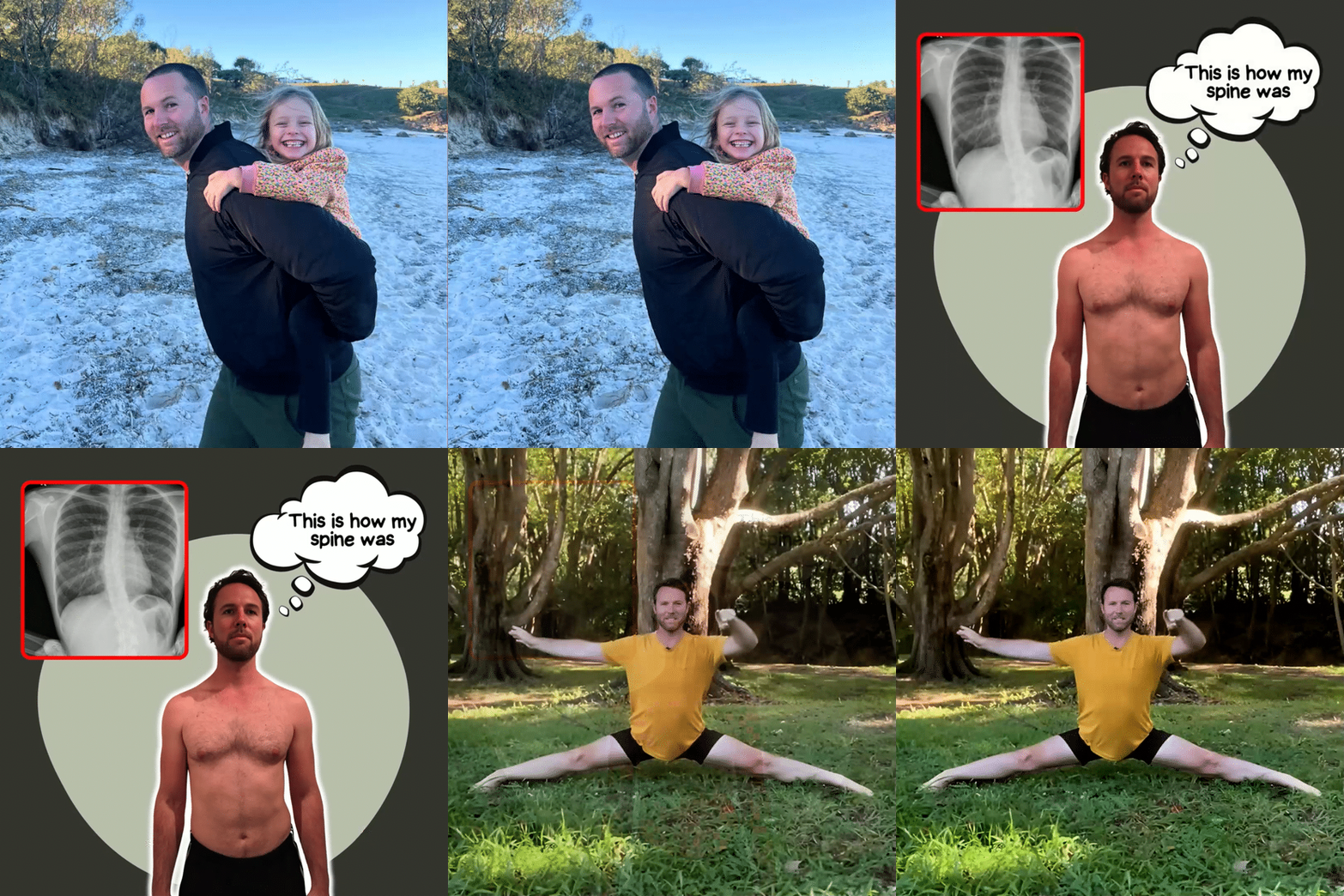
The physical therapy model was broken — so I rebuilt it.
But not without problems.
I had recurring back pain since I was in my 20's. A life of sport and late diagnosed scoliosis took it's toll on my body.
Every Physical Therapist, Doctor, Chiropractor, Osteopath I saw diagnosed me, told me what my problem was. They massaged, cracked and adjusted my body...
Sometimes they gave me some exercises with a flimsy latex band.
And every time, the pattern was the same. I’d feel better. Then a few weeks later — another flare-up.
That’s when it hit me: They were trying to fix me. Not help me heal myself.
I was stuck in a restricted body that I didn't trust anymore.
So frustrating.
Building a Body You Can Trust
I had one goal — to create a method that builds a strong, reliable body.
Also, able to move freely, so I don't rapidly degenerate as I age.
Strength training was the answer, right? The best way to get strong.
But to do it I needed continual access to heavy equipment. And just strength training made me move like a robot. Not fluid, flexible, or functional for real life.
The Search for The Path
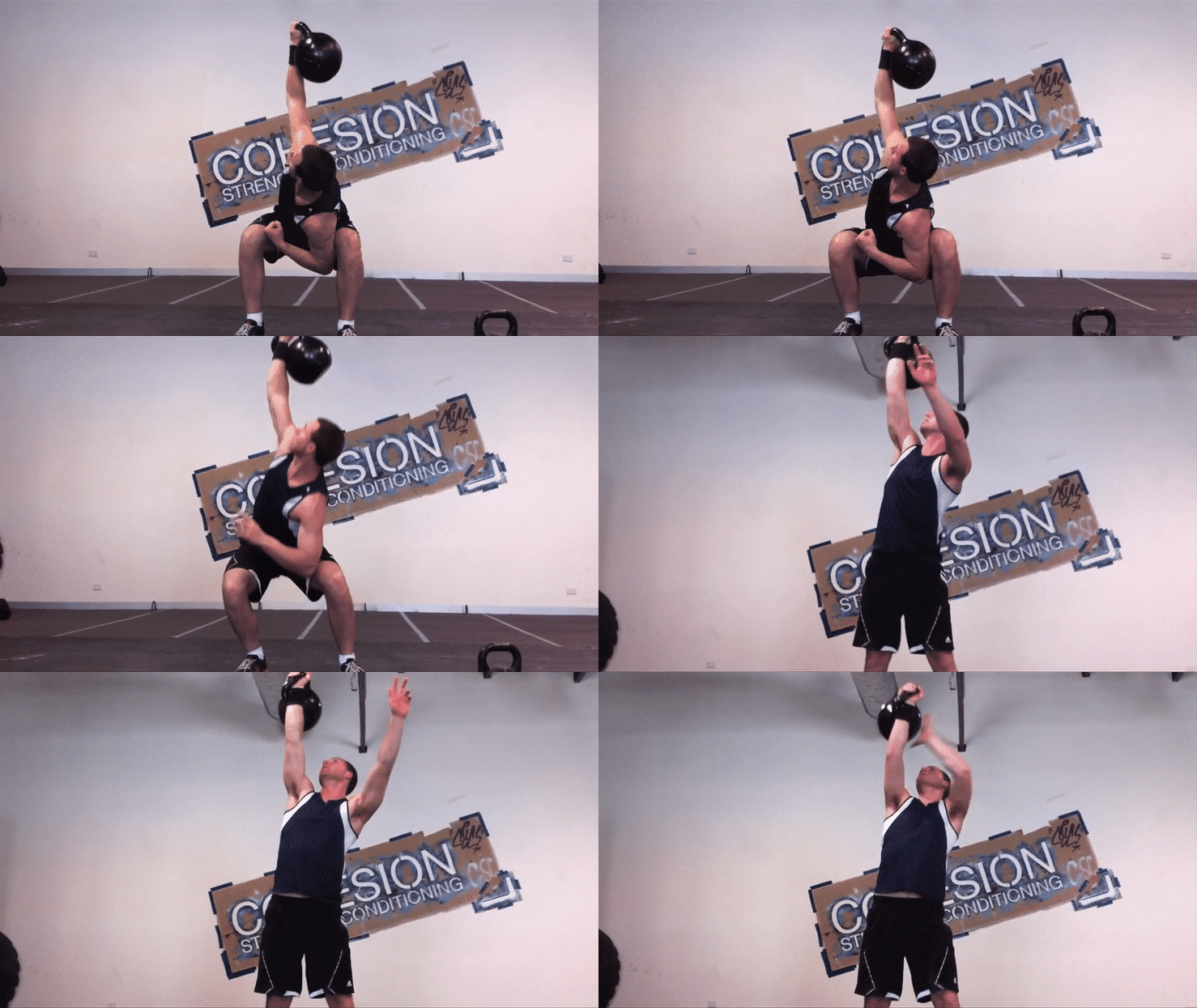
I wanted the endurance of a runner, the flexibility of a gymnast, resilience for martial arts and the inner peace of a monk.
First attempt... I blended functional fitness with body weight training.
I even started a gym called Cohesion Strength & Conditioning. To help people escape the treadmill and vanity muscles of the regular gyms.
BOOM. I thought I did it. People were getting fit and strong. Success!
But then, everything changed.
The Wake-Up Call
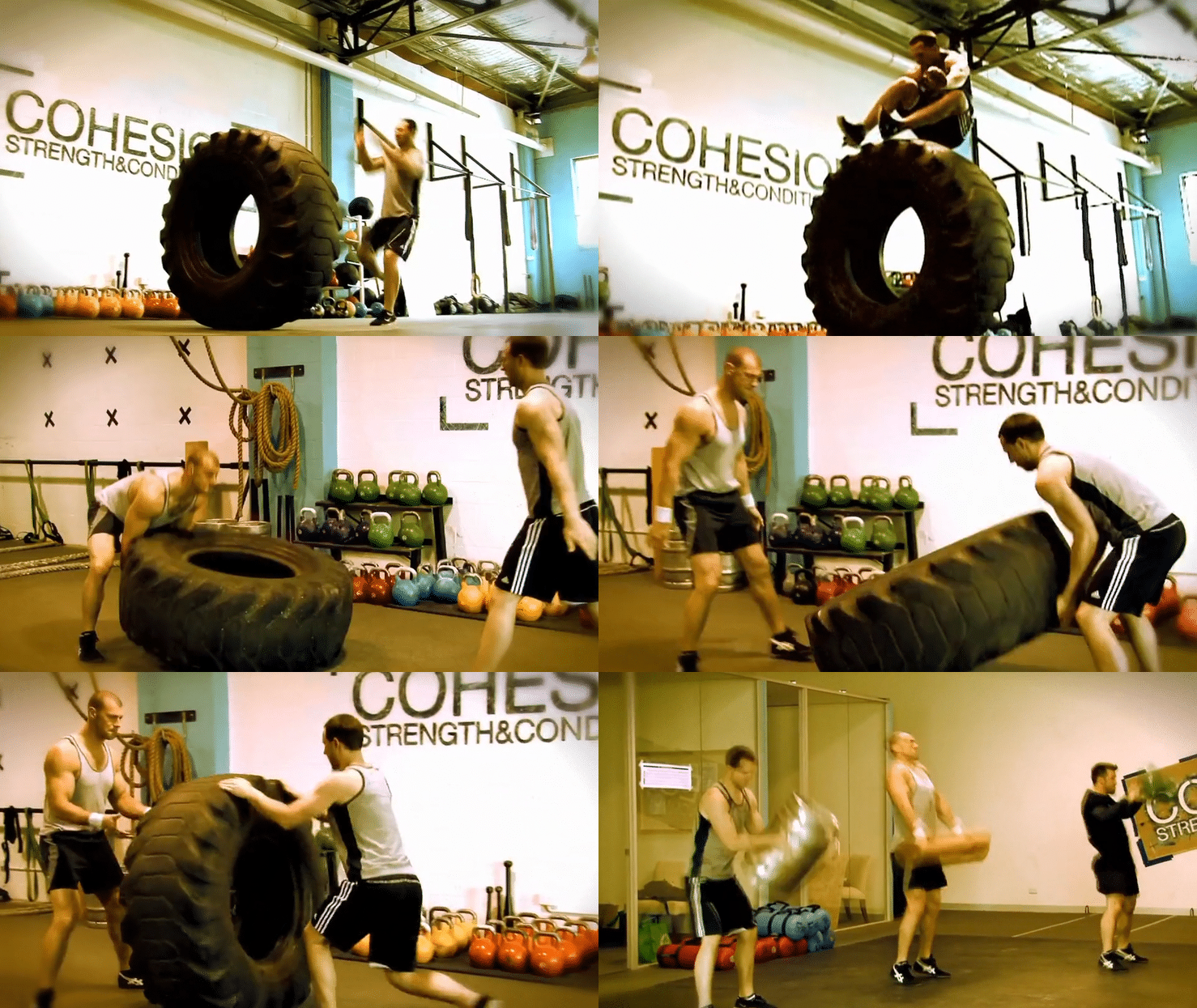
After years of stacking the sets and reps, I noticed my body was starting to feel a bit niggly, certain movements felt vulnerable, and recovery was slowing down.
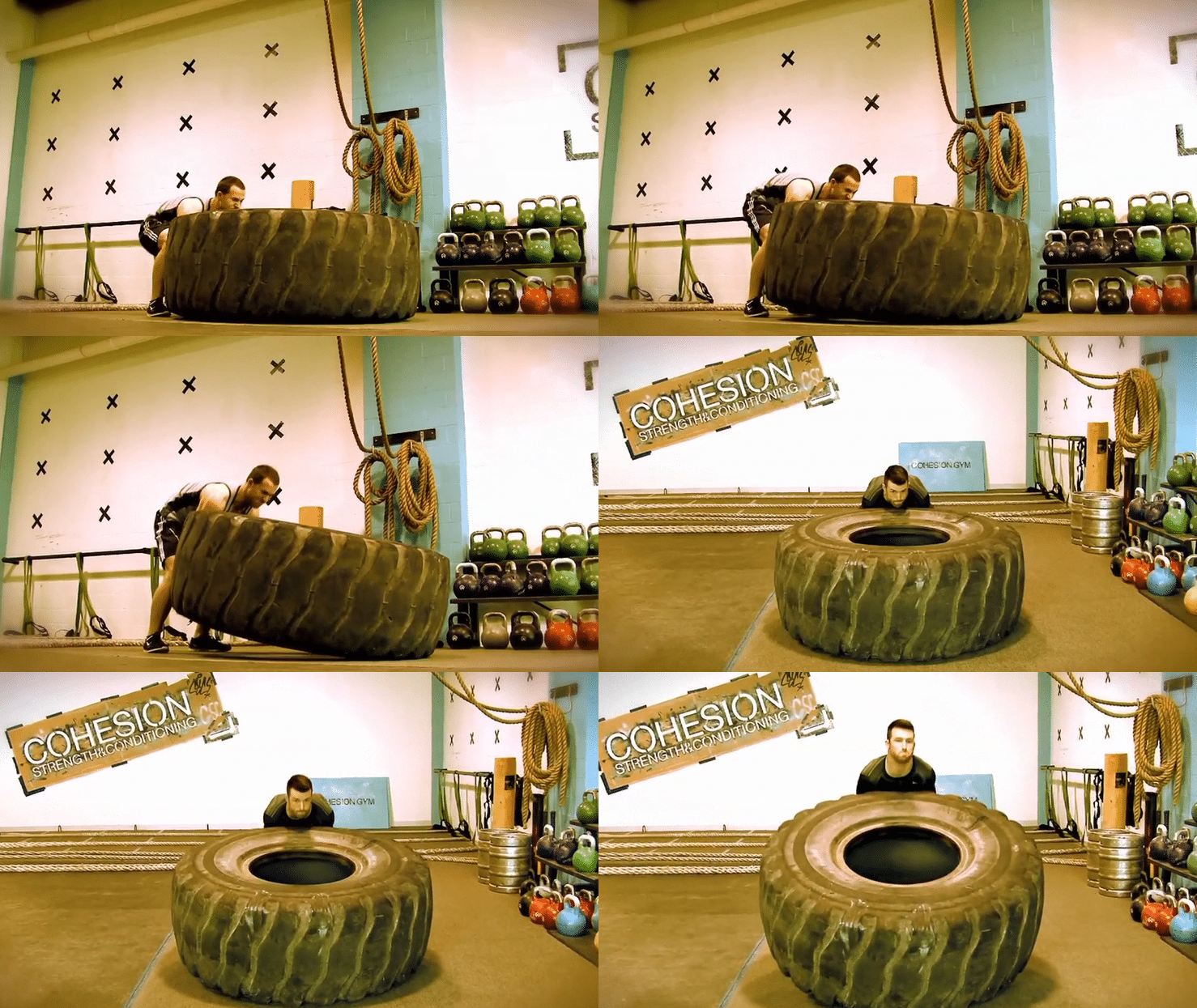
Then POP! I was lifting this big tyre and my back collapsed.
And months later it wouldn't fully heal — the pain kept coming back.
I'd try to go back to exercise, and my back would flare up again.
I researched why things weren't working.
I came across something linked to pain that I didn't expect to see: The Nervous System.
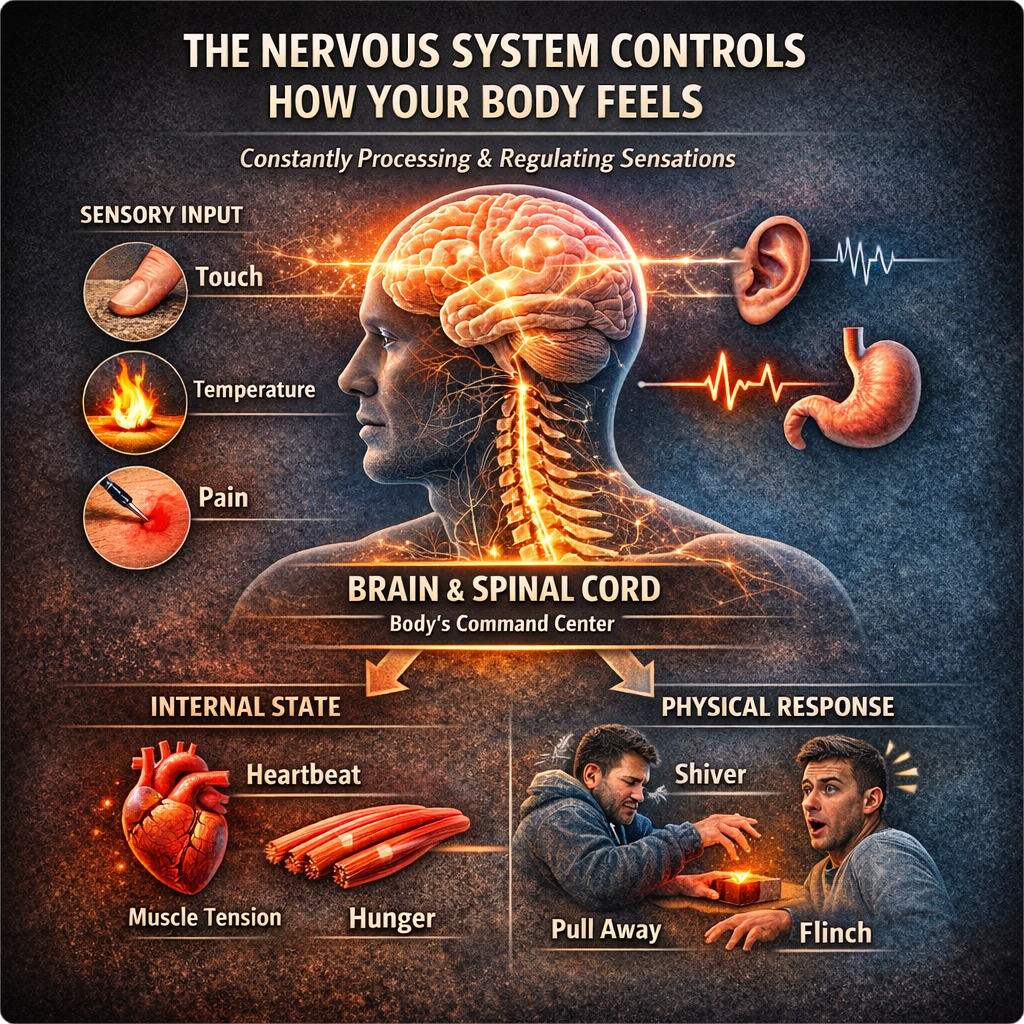
Research shows, the nervous system controls how the body feels.
By constantly processing sensory input (touch, pain, temperature) and regulating internal sensations like heartbeat, muscle tension, and hunger.
It acts as a communication network, with the brain and spinal cord interpreting surroundings and triggering physical reactions.
The Pivot
I had a choice: keep pushing my body and overloading my nervous system like most other people are doing, or change it.
I chose to do better.
I went back to the drawing board with one question...
How to build a strong, reliable body WITHOUT overloading the nervous system.
Goodbye Functional Fitness, hello Somatic Qigong!

It felt like a breath of fresh air for my nervous system, and the pain & tension started reducing. But my body got so relaxed I started losing my strength.
So I thought,
Why not combine the strength from Body Weight Training and Somatic Qigong's relaxation?
No method existed to blend these two magic methods successfully. So, I decided to.
After over ten years of trial and error, I created something special.
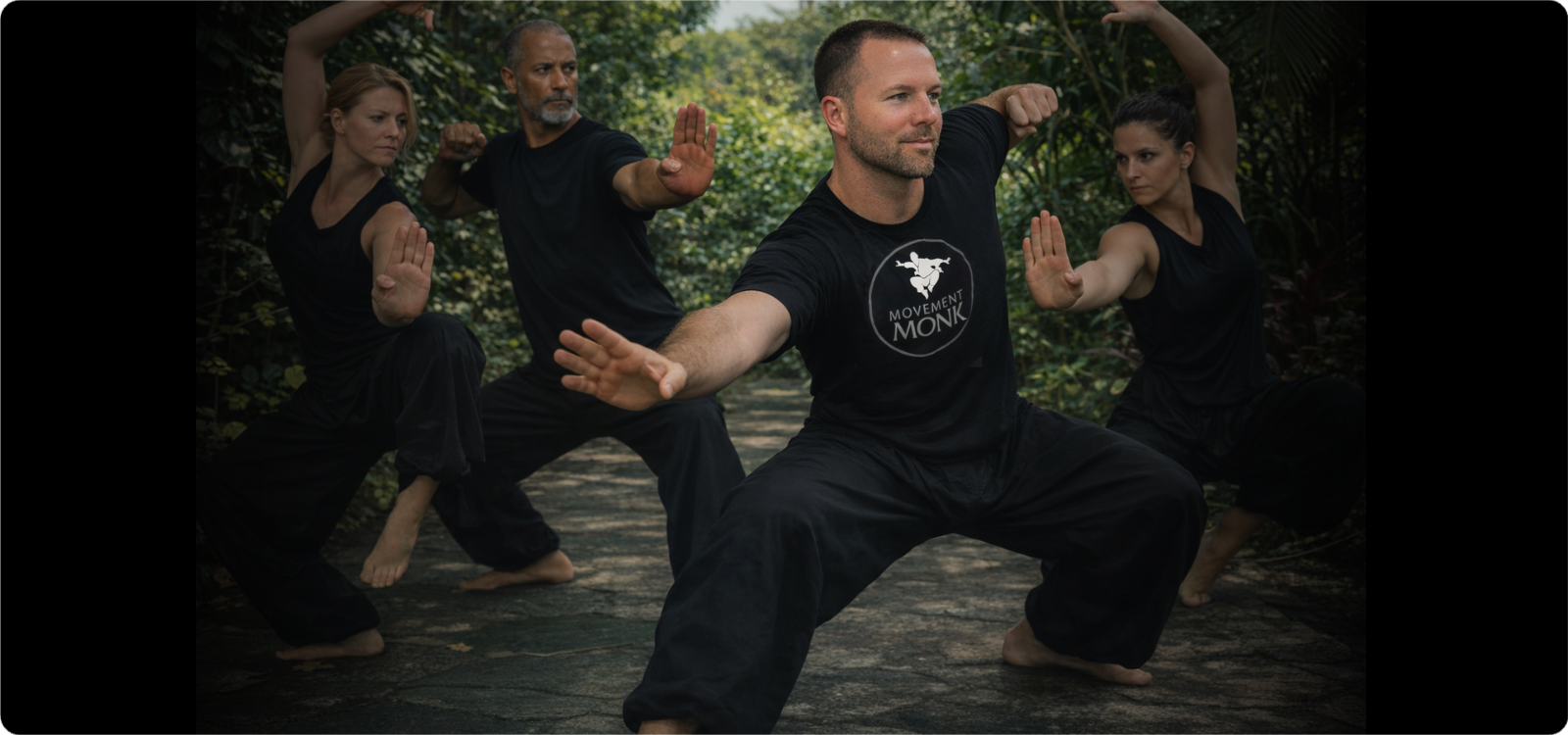
Enter: Neuro-Somatic Movement™ — our body-mind healing practice, blending Body Weight Training, Somatic Processing, and Qigong.
The method that not only builds a strong, flexible body on the outside, but a vital, peaceful body on the inside. Prepared for any challenge life throws at you.
Strength Without Override. Calm Without Collapse.
Strong:
Builds real, usable strength — without grinding your body down.
Fluid:
Restores natural, adaptable movement instead of rigid patterns.
Nervous-System Oriented:
Trains safety, capacity, and regulation before intensity.
Self-Healing:
Helps you process the protective patterns your body learned through stress and trauma.
Longevity:
Designed to support your body as you age, not break it faster.
Embodied:
You don’t just do the movements — you feel them integrate.
That’s how Neuro-Somatic Movement™ was born. A method that doesn’t wear your joints out, overload your nervous system, or trap you in endless reliance on therapy.
Just a body that looks, feels and moves younger, that you can trust again.
Our Mission
To break the cycle of intergenerational trauma, through having a regulated nervous system in every household around the world.
Physical health impact
Unregulated nervous systems (due to chronic trauma) contribute to higher rates of chronic pain, heart disease, and diabetes in affected families.
Research shows that traumatic experiences can be passed down biologically and behaviorally, affecting generations long after the initial event.
266 million
Global Burden: An estimated 266 million people globally suffer from PTSD.
DNA Changes
Epigenetic studies suggest trauma can cause physical changes in the DNA of the survivors, which are then passed down, affecting the biology of their children.
3.72 times higher
High Impact on Descendants: Offspring of parents with high levels of psychopathology (often stemming from trauma) have 3.72 times higher odds of reporting high levels of psychopathology themselves.
One-third of child victims
Generational Transmission: Roughly one-third of child victims of abuse grow up to continue a pattern of abusive or negligent parenting.
Over 70%
High Trauma Environments: Over 70% of people report experiencing at least one traumatic event in their lifetime.
Cycle of abuse
Parents who have not healed from their own trauma: Often cannot model self-soothing or emotional regulation, leading to higher levels of stress and anxiety in their children.
The Prevalence and Impact of Intergenerational Trauma
The statistics show that intergenerational trauma is a major, widespread public health issue with both biological and behavioral components. The "mission" to stop it is supported by research indicating that addressing parental trauma and helping parents regulate their nervous systems can stop the transmission to the next generation.
Join us on our mission to heal ourselves today, to break the cycle of trauma for our children.
If you're trying to heal and not feeling at home in your body, this is for you.
Get our 30-days, 30-ways to "Build an Unshakeable Nervous System” email series.
Congratulations you're in 🥳
You've registered for the 30 days, 30 ways to build an unbreakable nervous system email series.
Go to your inbox now to check out day 1 / 30.